Everything you need to know about torsion and extension spring replacement — types, costs, warning signs, and why this is never a DIY job. Stay safe with professional spring repair.
Understanding Torsion vs. Extension Springs
Garage doors use one of two spring systems: torsion springs or extension springs. Torsion springs are mounted horizontally above the door opening and use torque to lift the door. Extension springs run along the horizontal tracks on each side and stretch to provide lifting force. Torsion springs are more common in modern installations because they offer smoother operation, longer lifespan, and better balance. Extension springs are found in older homes and lighter doors. Knowing which type your door uses is important because the replacement process, parts, and costs differ significantly between the two systems.
Warning Signs Your Springs Are Failing
Garage door springs don't fail without warning — there are usually clear signs that replacement is needed. A door that feels unusually heavy when lifted manually, gaps in the torsion spring coils, a door that slams shut instead of closing smoothly, or a loud bang from the garage (the sound of a spring breaking) are all indicators. Most torsion springs are rated for 10,000 to 15,000 cycles, which translates to roughly 7 to 10 years of typical use. If your springs are approaching this age, proactive replacement can prevent an inconvenient — or dangerous — failure.
Why Spring Replacement Is Not a DIY Job
Garage door springs are under enormous tension — a standard torsion spring holds hundreds of pounds of force. Attempting to replace springs without proper tools, training, and safety equipment can result in serious injury or death. Every year, thousands of emergency room visits are attributed to garage door spring accidents. Professional technicians use specialized winding bars, safety cables, and precise calibration techniques to replace springs safely. The cost of professional [spring replacement](/services/garage-door-spring-panel-replacement) is a small price to pay compared to the risk of a DIY disaster.
What to Expect During Professional Replacement
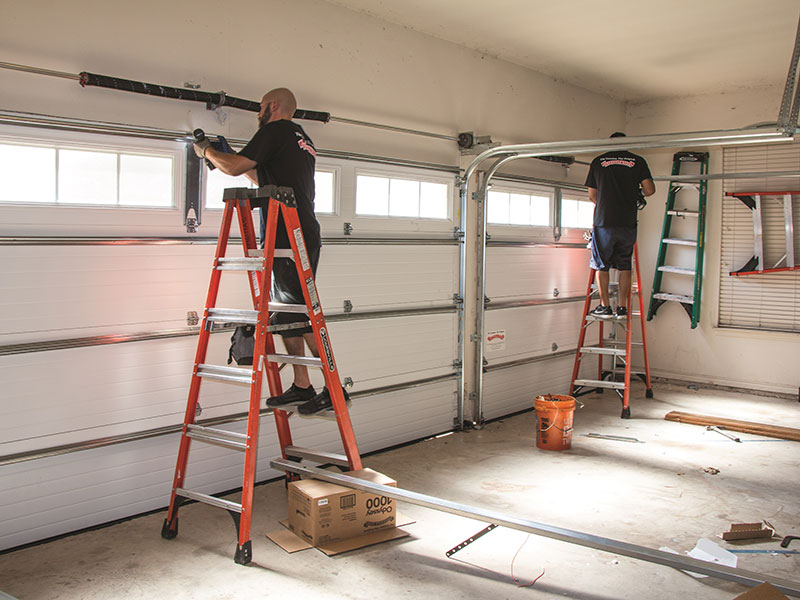
A professional spring replacement typically takes 45 minutes to an hour. The technician will secure the door, release tension from the old springs, remove them, and install new springs matched to your door's weight and size. They'll then balance the door, lubricate all moving parts, and test the opener to ensure smooth operation. Many professionals recommend replacing both springs at the same time, even if only one has broken — if one spring has failed, the other is likely near the end of its lifespan. Homeowners in [Atlanta](/locations/georgia/atlanta) and [Orlando](/locations/florida/orlando) can count on our team for fast, same-day spring replacement.
Cost Factors for Spring Replacement
The cost of garage door spring replacement varies based on the spring type, door size, and your location. Torsion spring replacement typically ranges from $200 to $400 for a single spring, while replacing both springs costs $250 to $550. Extension spring replacement is generally less expensive, ranging from $150 to $300 per pair. High-cycle springs rated for 25,000 or more cycles cost more upfront but last significantly longer. Emergency or after-hours service may carry an additional fee. Get a detailed estimate from your technician before work begins, and beware of companies that quote suspiciously low prices — they often upsell once the door is disassembled.
Need Professional Garage Door Help?
Contact Garage Door Rapid Fix for a free estimate on your next project.
Get a Free QuoteLooking for garage door services in your area? Browse our full service directory by city.